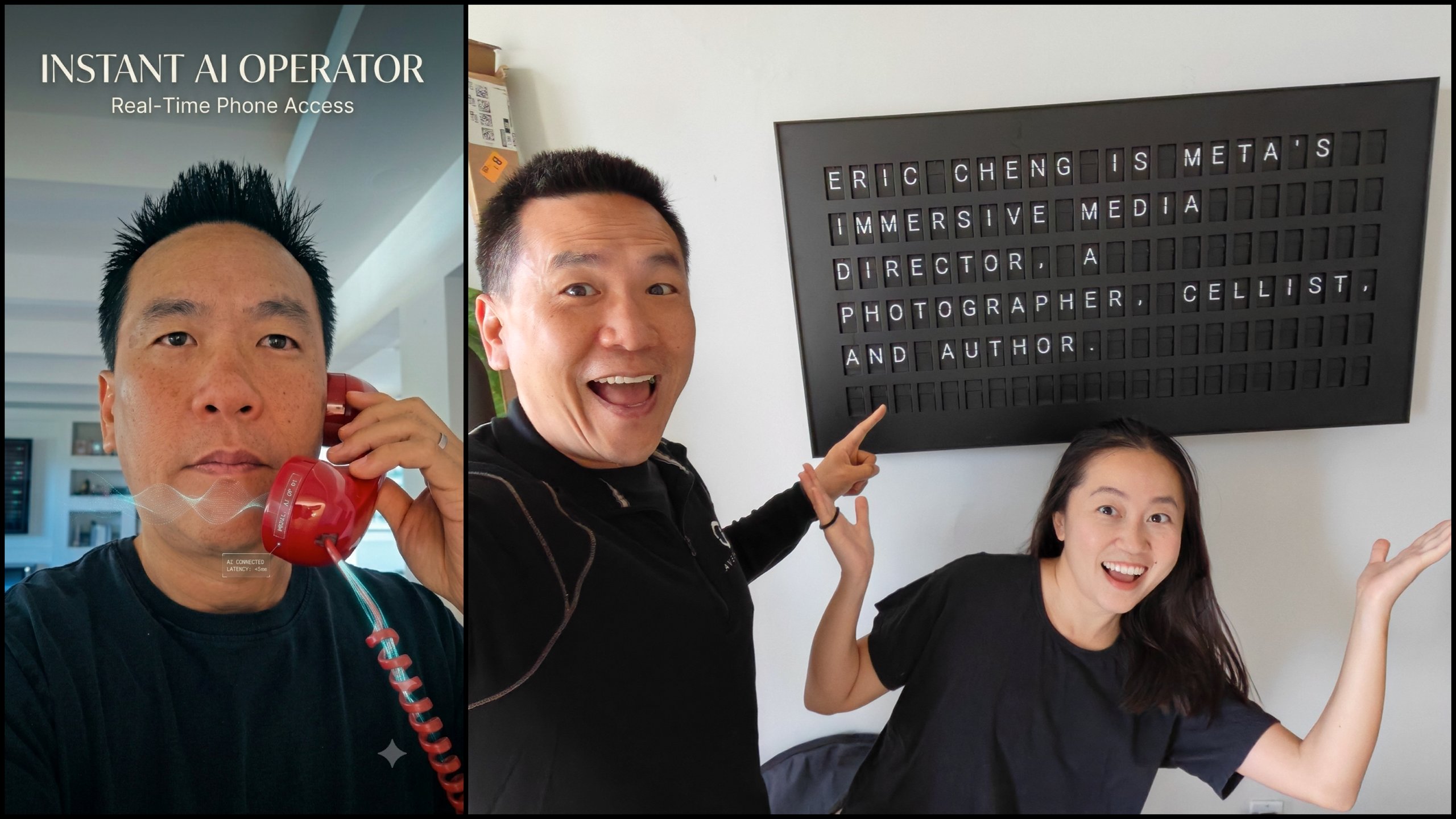
Vestaphone turns an ordinary analog telephone into an AI interface with no buttons or app. Lift the handset and ask a question out loud: your speech is transcribed, an AI writes a short answer sized to fit a Vestaboard split-flap display, and that answer flips onto the board. The system confirms the board received exactly what it was sent before treating the answer as delivered.
Press 0 on the keypad and the experience changes: instead of writing to the board, the call becomes a live back-and-forth voice conversation with an AI operator heard through the handset. It answers right away with a spoken "Operator." greeting, then talks freely for up to ten minutes.
The preferred build leaves the original telephone completely stock: its carbon microphone, receiver, cradle switch, and line circuit are all untouched, and a network adapter bridges the unmodified phone to the system. The phone is a touch-tone model, not a rotary; a rotary version remains a future goal.
Features
- Pick up the phone and ask a question out loud; no buttons, no app, no screen. A short, clear answer flips onto the split-flap board a few seconds later
- Hang up when you're done; lift the handset again to start over
- Dial 0 to talk to a live AI operator, a real back-and-forth voice conversation through the handset
- Ask about current events and it looks things up on the web for you
- It remembers what you asked earlier in the same call, so you can keep the conversation going
- A few hidden spoken commands, like clearing the board or asking for a joke
- Every call is recorded so you can listen back later (can be turned off)
Under the hood
- —PCM passed as 8 kHz G.711 mu-law directly to OpenAI Realtime, avoiding resampling and eliminating a native audio dependency
- —DTMF 0 triggers an operator mode switch: transcription is retired, a new full-duplex Realtime session opens concurrently, and a canned greeting plays with no perceptible gap
- —Deterministic answer validation rejects clarification language and overflow before writing; an independent structured finality judgment catches semantically incomplete responses
- —Pickup and hangup transients suppressed by requiring deliberate speech before audio becomes a request; 450 ms silence gate triggers utterance submission
- —Speech-to-answer pipeline chains Asterisk AudioSocket, OpenAI Realtime transcription, a Responses model, and a Vestaboard write
- —Exact 6x22 matrix readback required before an answer is considered delivered
- —Canned "Operator." PCM greeting plays immediately on mode switch while the Realtime session establishes behind it
- —Mock mode runs the full pipeline without physical hardware for development
- —ALSA/GPIO Codec Zero alternative input path alongside the preferred HT801 build; replaces the carbon mic with an electret and uses GPIO27 for hook detection (untested)
- —Extension 700 wired to Asterisk Echo for end-to-end audio diagnostics